
Sales Intelligence Platform: What to Look For
A sales intelligence platform helps teams understand who they are selling to before the first conversation. Instead of relying on scattered spreadsheets, aging CRM records, and guesswork, sales professionals can research prospects, verify contact details, and add useful context to the accounts they already track.
Choosing the right platform takes more than comparing feature lists. The best fit depends on the quality and reach of the underlying data, how your team accesses it, and how well it supports the research you do every day. This guide walks through the factors that matter most so you can evaluate options with confidence. You can also create a free account to follow along as you read.
What a Sales Intelligence Platform Does
At its core, a sales intelligence platform gathers and organizes information about people and businesses so sales teams can research, verify, and prioritize opportunities. Common uses include:
- Prospect research: Learning more about the people and companies you plan to contact.
- Contact verification: Confirming that names, addresses, and other contact details are current before outreach.
- Data enrichment: Filling gaps in existing CRM records with additional details.
- Account context: Cross-referencing business, asset, and court record data to better understand an organization.
When these tasks happen in one place, reps spend less time hunting for information and more time having relevant conversations.
Start With Data Coverage and Quality
Every insight a platform delivers depends on the data behind it. Before evaluating dashboards or workflows, look closely at where the information comes from and how it is maintained.
Questions worth asking
- How many sources feed the platform? Broader sourcing improves your ability to cross-reference and confirm details.
- How current is the data? Real-time access helps reduce the risk of acting on outdated records.
- What data types are included? Identity, people, business, asset, and court record data each answer different research questions.
EnformionGO, for example, draws on more than 6,000 unique data sources for public-record inquiries and for cross-referencing the data your team already has.
Choose How Your Team Accesses the Data
Sales teams rarely work the same way, so flexible access matters. Most platforms offer one or both of the following options.
Self-service search
Self-service searches let individual reps look up a person or business on demand. This works well for account research before a call, quick verification, or reviewing a single prospect in more depth.
API integration
API integrations bring data directly into the tools your team already uses, such as a CRM or internal application. Developers can automate verification and enrichment at scale, so records stay more complete without manual effort.
EnformionGO supports both approaches, which lets teams start with searches and expand into integrations as needs grow. Explore EnformionGO to see how each option fits your process.
Match the Platform to Your Sales Workflow
A capable platform still needs to fit the way your team sells. As you compare options, consider how each one supports your day-to-day research:
- Purpose: Confirm the data is intended for business uses such as sales research, market research, and data verification.
- Ease of use: Reps should be able to find and confirm information quickly, without extensive training.
- Integration options: Check whether the platform can connect with the systems where your records already live.
- Scalability: Look for an option that serves a single rep today and a larger team or automated workflow later.
Testing a platform with a few real research tasks is often the clearest way to judge fit.
Build a Smarter Sales Research Process
The right sales intelligence platform gives your team reliable data, flexible access, and a clear path from research to outreach. Focus on data coverage, current information, and workflow fit, and you will be better positioned to choose a tool that supports better conversations and cleaner records.
If you are ready to see these capabilities in action, the steps below show how to begin. Get Started with EnformionGO.
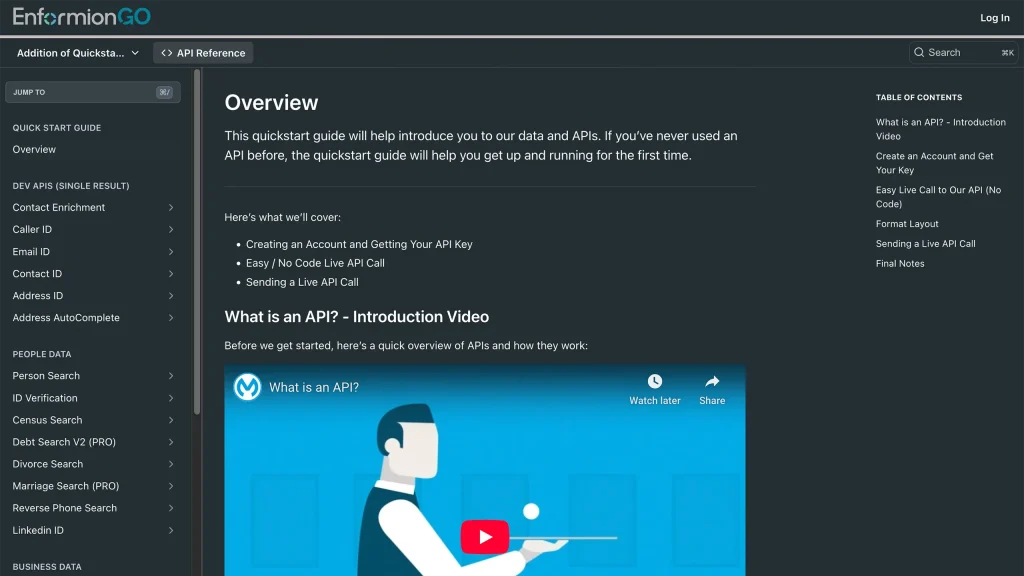
Getting familiar with how to use EnformionGO’s search and API products is very helpful in deciding what products you’ll want to use. We’ve created this quick start guide to walk new users through how to use EnformionGO. Happy searching!