
Customer Segmentation: Build Better Audiences
Customer segmentation helps businesses organize audiences into meaningful groups based on the information available about them. But useful segmentation depends on having enough reliable context to understand how records relate to one another.
Identity and public-record data can support that process by helping teams research, verify, cross-reference, and enrich existing information. With stronger data context, marketers, sales professionals, real estate professionals, and other business users can build audience segments that are more useful for appropriate research and outreach workflows.
EnformionGO provides real-time access to identity, people, business, asset, and court record data for these types of research and data-collection needs.
What Is Customer Segmentation?
Customer segmentation is the practice of organizing a broader audience into smaller groups based on shared characteristics or available data.
Depending on the research objective and information available, teams might organize records around factors such as:
- Geographic information
- Known identity or contact information
- Business-related information
- Existing customer or prospect data
- Other relevant attributes within an appropriate research workflow
The purpose is to create structure within a larger dataset. Instead of treating every record the same, segmentation can help teams organize research and better understand different parts of an audience.
Better Data Creates Better Audience Context
Segmentation is only as useful as the information available to support it. Records with missing, outdated, or disconnected information can provide limited context for determining how they should be organized.
Data research and cross-referencing can help fill those gaps.
For example, a business may begin with existing records containing only certain pieces of identity or contact information. Additional research can help verify known information, identify related data, or add context to existing records.
This creates a clearer foundation for organizing audiences around relevant characteristics rather than relying on isolated data points.
How Data Enrichment Supports Customer Segmentation
Data enrichment adds relevant information to records a business already maintains. In a segmentation workflow, enrichment can provide additional context for organizing and researching those records.
EnformionGO draws on more than 6,000 unique data sources for public-record inquiries and cross-referencing existing data. Users can access identity, people, business, asset, and court record data through self-service searches and API integrations.
That information can support data verification, data collection, market research, marketing, sales research, real estate research, and related business research workflows.
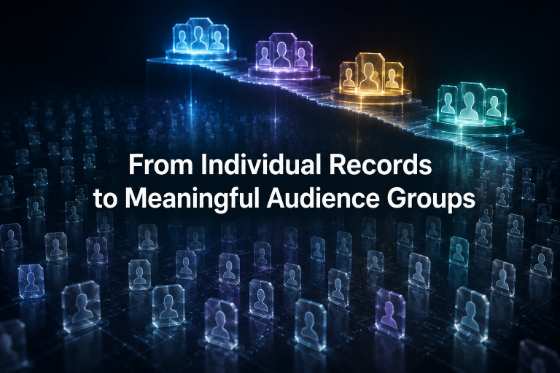
From Individual Records to Meaningful Audience Groups
A segmentation workflow can be viewed as a progression from individual pieces of information to organized audience groups.
Teams may start by reviewing existing records, then research or cross-reference relevant information before grouping records according to their objectives.
A practical workflow might include:
- Review existing data to understand what information is already available.
- Verify key details when additional confirmation is needed.
- Cross-reference records to establish additional context.
- Enrich existing information with relevant available data.
- Organize records into segments that support the intended research or marketing workflow.
This approach keeps segmentation connected to the underlying data rather than treating audience creation as a standalone exercise.
Customer Segmentation for Marketing and Sales Research
Different teams can approach segmentation according to the questions they are trying to answer.
Marketing teams may use segmentation as part of market and audience research, while sales professionals may organize prospect information to support sales research. Real estate professionals and other business users can similarly structure data around appropriate research objectives.
The important step is defining the purpose of the segment first. Once the research question is clear, teams can determine which available information is relevant for organizing and evaluating the audience.
Keep Segmentation Connected to Data Quality
Customer segmentation is not simply about creating more groups. The underlying records need enough context to make those groups useful.
Before building or refining segments, consider:
- What information is already available?
- Which records are missing useful context?
- Are important details suitable for verification or cross-referencing?
- Which attributes are actually relevant to the research objective?
- How will the resulting segments support the intended workflow?
Starting with these questions can keep the segmentation process focused on useful data rather than unnecessary complexity.
Build Audiences With More Data Context
Effective customer segmentation starts with understanding the records behind the audience. Researching, verifying, enriching, and cross-referencing existing information can provide additional context for organizing data into meaningful groups.
EnformionGO gives business users real-time access to identity, people, business, asset, and court record data through self-service searches and API integrations, supporting appropriate audience research, marketing, sales research, and related data workflows.
Ready to explore how additional data context can support your segmentation research? Get Started.
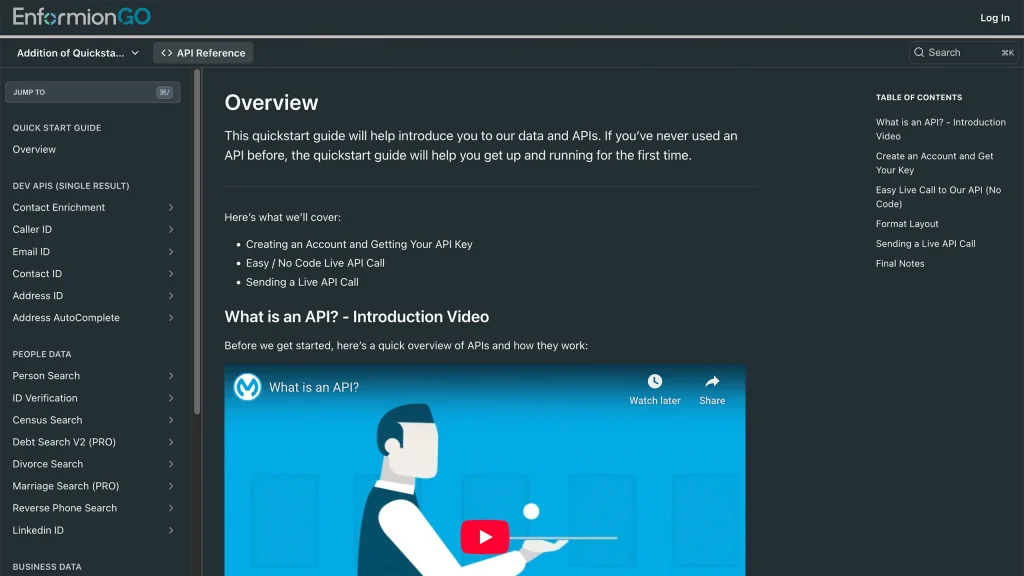
Getting familiar with how to use EnformionGO’s search and API products is very helpful in deciding what products you’ll want to use. We’ve created this quick start guide to walk new users through how to use EnformionGO. Happy searching!