
REST API: A Practical Guide to People Data
People data becomes more useful when it can move directly into the tools and workflows where research happens. A REST API gives developers and business teams a structured way to request data programmatically instead of relying only on manual searches.
For organizations working with identity and people data, API access can support data verification, enrichment, cross-referencing, sales research, marketing research, and other data-driven workflows.
EnformionGO provides real-time access to identity, people, business, asset, and court record data through self-service searches and API integrations.
What Is a REST API?
A REST API allows software applications to communicate over the web using standardized requests and responses. Instead of manually searching for information, an application can send a request to an API and process the returned data within a workflow.
For people data research, this creates a direct connection between a data source and the application using the information.
REST API workflows can involve:
- Sending a structured request
- Providing known information as input
- Receiving a structured response
- Processing or cross-referencing returned data
- Using the response in a broader research workflow
The exact implementation depends on the API and application.
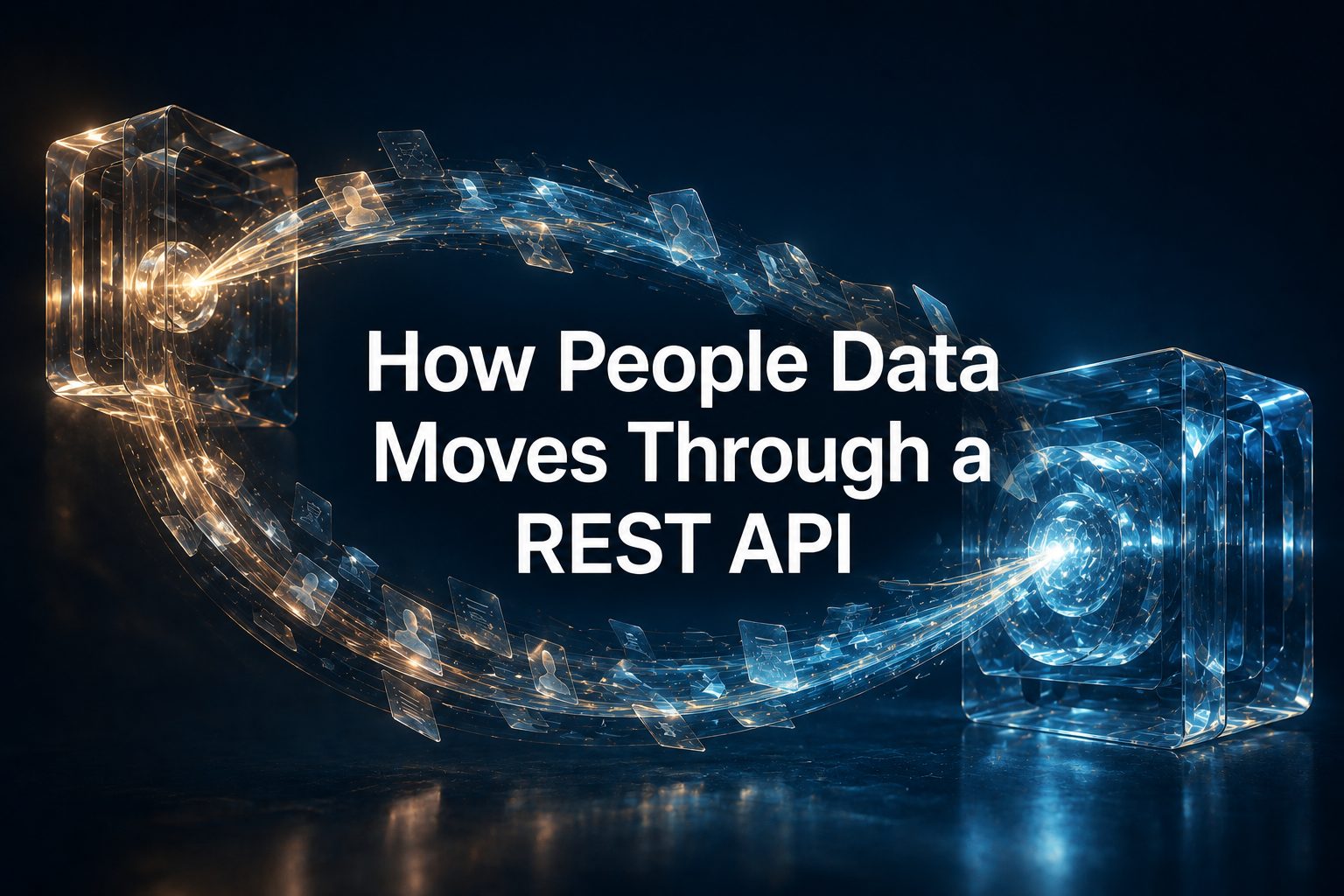
How People Data Moves Through a REST API
A people data API workflow typically starts with information already available to the user or application. That information is included in an API request and sent to a data platform for processing.
The response can then support an appropriate research, verification, or data-collection workflow.
At a high level, the process looks like this:
- Start with existing data. The application prepares information for the request.
- Send the API request. The request passes information to the data platform.
- Receive the response. Returned data becomes available to the application.
- Use the data. The application can process or cross-reference the response within its workflow.
This request-and-response model helps developers connect people data research with the applications they build.
Where People Data APIs Fit Into Business Research
API access is useful when data research needs to become part of a repeatable digital process.
Developers might incorporate data access into an application, while marketing and sales teams may use connected workflows for research or verification. Real estate professionals and other business users can also use people data for appropriate research and data-collection purposes.
Applications can include market research, sales research, data verification, data collection, and cross-referencing existing information.
The API creates a structured path between a data request and the workflow that needs the information.

From Individual Data Points to Connected Context
A single piece of information may provide only a narrow view. Cross-referencing existing data can create more useful context for research.
For example, a workflow may begin with information already present in a business record. API-based data access can provide additional information that the application processes alongside what is already known.
This can support workflows such as:
- Verifying existing data
- Enriching records for research
- Supporting sales and marketing research
- Organizing information for segmentation
- Cross-referencing records during business research
EnformionGO draws on more than 6,000 unique data sources for public-record inquiries and cross-referencing existing data.
REST API Access vs. Self-Service Search
API access and self-service search can serve different research needs.
A self-service search can make sense when a business user wants to conduct an individual inquiry directly. API integration is useful when developers need data access to function programmatically within an application or broader workflow.
EnformionGO supports both self-service searches and API integrations, giving business users and developers different ways to access data based on how their research process is structured.
The choice depends on whether the task is a direct search or part of a connected application workflow.
Planning a People Data API Workflow
Before building an API-based workflow, define what the application needs to accomplish with the data.
Useful questions include:
- What existing information will initiate the request?
- What research or verification task does the data support?
- How will the application process the response?
- Will returned information be cross-referenced with existing records?
- Where does the data fit into the larger research workflow?
Answering these questions helps keep technical implementation connected to a clear business purpose.
Making People Data Part of the Workflow
REST APIs provide a practical way to bring people data into applications while keeping data access connected to the workflow that needs it.
For developers, marketers, sales professionals, real estate professionals, and other business users, this can support data research, verification, collection, and cross-referencing within connected processes.
EnformionGO provides real-time access to identity, people, business, asset, and court record data through API integrations and self-service searches, supporting appropriate business research workflows.
Ready to explore people data for your workflow? Get Started.
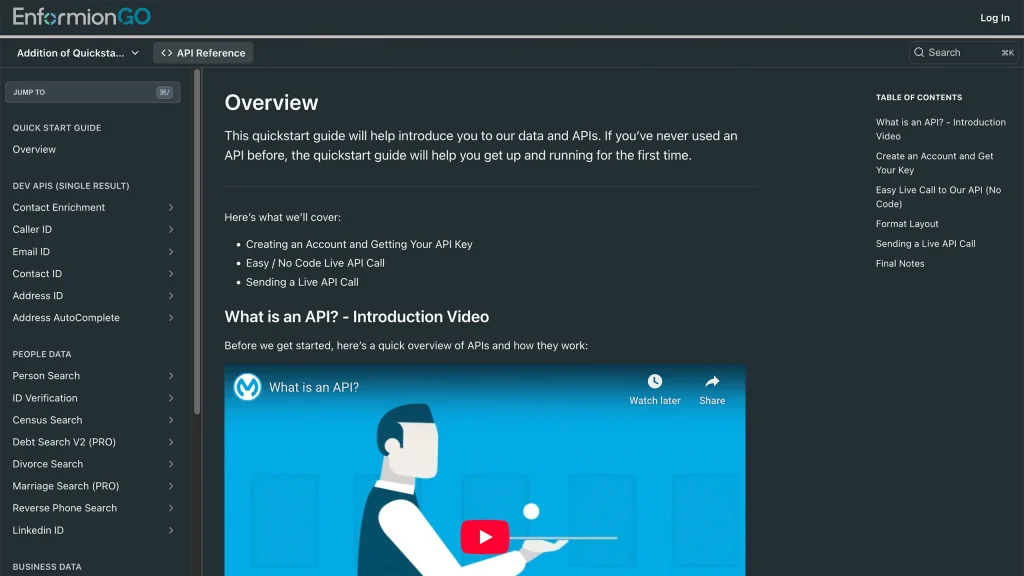
Getting familiar with how to use EnformionGO’s search and API products is very helpful in deciding what products you’ll want to use. We’ve created this quick start guide to walk new users through how to use EnformionGO. Happy searching!