
What Is 3rd Party Data in Marketing?
Third-party data in marketing refers to information collected by organizations that do not have a direct relationship with the individuals or entities the data describes. This data is typically aggregated from a wide range of external sources and then made available to businesses for insights, targeting, and analysis. Marketers use third-party data to better understand audiences, identify opportunities, and enhance campaign performance with broader, more comprehensive datasets.
Unlike first-party data (collected directly from customers) or second-party data (shared between trusted partners), third-party data provides scale and reach, allowing organizations to access information beyond their immediate networks.
How Third-Party Data Is Collected
Third-party data is gathered from multiple independent sources and compiled into unified datasets. These sources may include:
- Public records and government databases
- Online activity and behavioral data
- Business and corporate filings
- Property and asset records
- Court and legal records
The value of third-party data comes from its breadth. By combining thousands of data points, businesses can create a more complete picture of individuals, markets, and industries.

Why Third-Party Data Matters in Marketing
Marketers rely on third-party data to enrich their understanding of target audiences and improve outreach strategies. Some of the key benefits include:
Expanded Audience Insights
Third-party data enables marketers to identify new customer segments and refine targeting strategies with detailed demographic, geographic, and behavioral information.
Improved Campaign Precision
With more comprehensive data, marketing campaigns can be tailored to reach the right audience at the right time, increasing relevance and engagement.
Enhanced Market Research
Access to broader datasets allows businesses to analyze trends, evaluate competition, and uncover new opportunities in different markets.
Data Enrichment
Third-party data complements existing internal data, filling in gaps and providing additional context that strengthens decision-making.
Real-World Applications of Third-Party Data
Third-party data plays a vital role across multiple industries, especially where accurate and timely information is essential.
For Realtors and Developers
- Identify property ownership trends
- Analyze neighborhood demographics
- Discover investment opportunities
For Marketers and Sales Professionals
- Build targeted prospect lists
- Understand customer behaviors
- Personalize outreach strategies
For Businesses and Analysts
- Conduct competitive research
- Research public business and ownership information
- Monitor market shifts in real time

How EnformionGO Supports Third-Party Data Strategies
Platforms like EnformionGO make it easier for organizations to access and utilize third-party data effectively. EnformionGO is a data intelligence platform that provides real-time access to identity, people, business, asset, and court record data through both self-service searches and API integrations.
With information sourced from over 6,000 unique data providers, EnformionGO enables users to perform public record inquiries and cross-reference existing data seamlessly. This level of integration supports a wide range of use cases, particularly for professionals who depend on reliable and comprehensive datasets.
Key capabilities include:
- Real-time data access for faster insights
- Cross-referenced records for improved accuracy
- Flexible API integrations for research and data management workflows
- Specialized tools for market research and data collection
For realtors, developers, marketers, and sales professionals, EnformionGO offers a streamlined way to gather and analyze third-party data, helping turn raw information into actionable insights. If you’re looking to enhance your data strategy, you can explore the platform and get started today.
Best Practices for Using Third-Party Data
Organizations should ensure third-party data is used in compliance with applicable laws and regulations and only for lawful business, marketing, and research purposes.
To maximize the value of third-party data, businesses should follow a few key practices:
- Validate Data Sources: Ensure the data comes from reputable providers with consistent updates
- Integrate Thoughtfully: Combine third-party data with internal datasets for a more complete view
- Focus on Relevance: Use data that aligns closely with your marketing goals and audience needs
- Leverage Technology: Utilize platforms that simplify data access and analysis
Solutions like EnformionGO help streamline these practices by offering a centralized platform where users can efficiently access and analyze diverse datasets. Whether you’re conducting market research or building targeted campaigns, having the right tools in place makes a meaningful difference—so it’s worth taking a moment to get started and explore what’s possible.
Bringing It All Together
Third-party data continues to be a powerful resource in modern marketing, offering scale, depth, and flexibility for organizations seeking to better understand their audiences and markets. With platforms like EnformionGO, accessing and applying this data becomes more efficient and actionable, empowering professionals to make informed, data-driven decisions. Ready to take advantage of comprehensive third-party data insights? Get started and see how it can support your marketing strategy.
Frequently Asked Questions About Third-Party Data in Marketing
What is third-party data in marketing?
Third-party data in marketing is information collected by organizations that do not have a direct relationship with the individuals or businesses represented in the data. It is often aggregated from public records, business data, demographic sources, and other external datasets to help marketers better understand audiences and markets.
How is third-party data commonly used in business and marketing research?
Marketers use third-party data to expand audience insights, improve segmentation, enrich existing customer data, support market research, and identify new opportunities for outreach. When used responsibly, it helps teams make more informed campaign and research decisions.
What makes third-party data useful for realtors, developers, and sales teams?
Third-party data can help realtors, developers, and sales professionals evaluate property trends, understand local markets, identify business opportunities, and organize outreach around more complete data. Platforms like EnformionGO make this easier by providing access to identity, people, business, asset, and court record data through self-service searches and API integrations.
How does EnformionGO support third-party data research?
EnformionGO utilizes information from over 6,000 unique data sources to support public record inquiries and cross-reference existing data. The platform helps users access real-time data for research, marketing, sales, and business intelligence workflows in one streamlined environment.
Can third-party data be combined with first-party data?
Yes. Businesses often combine third-party data with first-party data to enrich customer profiles, fill information gaps, and gain a broader view of audiences or markets. This approach can help teams improve targeting, analysis, and data-driven planning.
How can businesses get started with EnformionGO?
Businesses looking for a practical way to access third-party data, public records, and cross-referenced insights can get started with EnformionGO and explore tools designed for realtors, developers, marketers, and sales professionals.
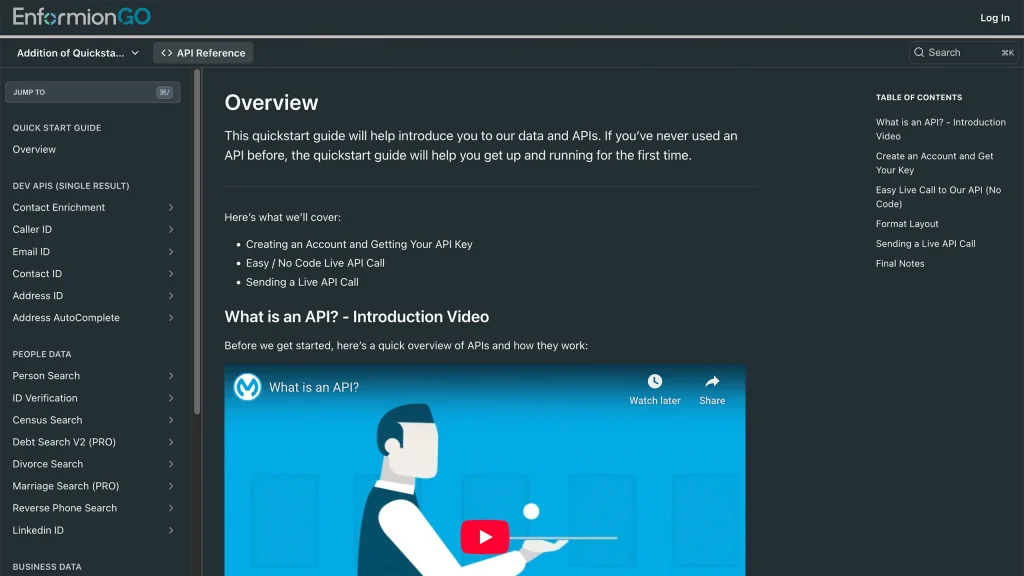
Getting familiar with how to use EnformionGO’s search and API products is very helpful in deciding what products you’ll want to use. We’ve created this quick start guide to walk new users through how to use EnformionGO. Happy searching!